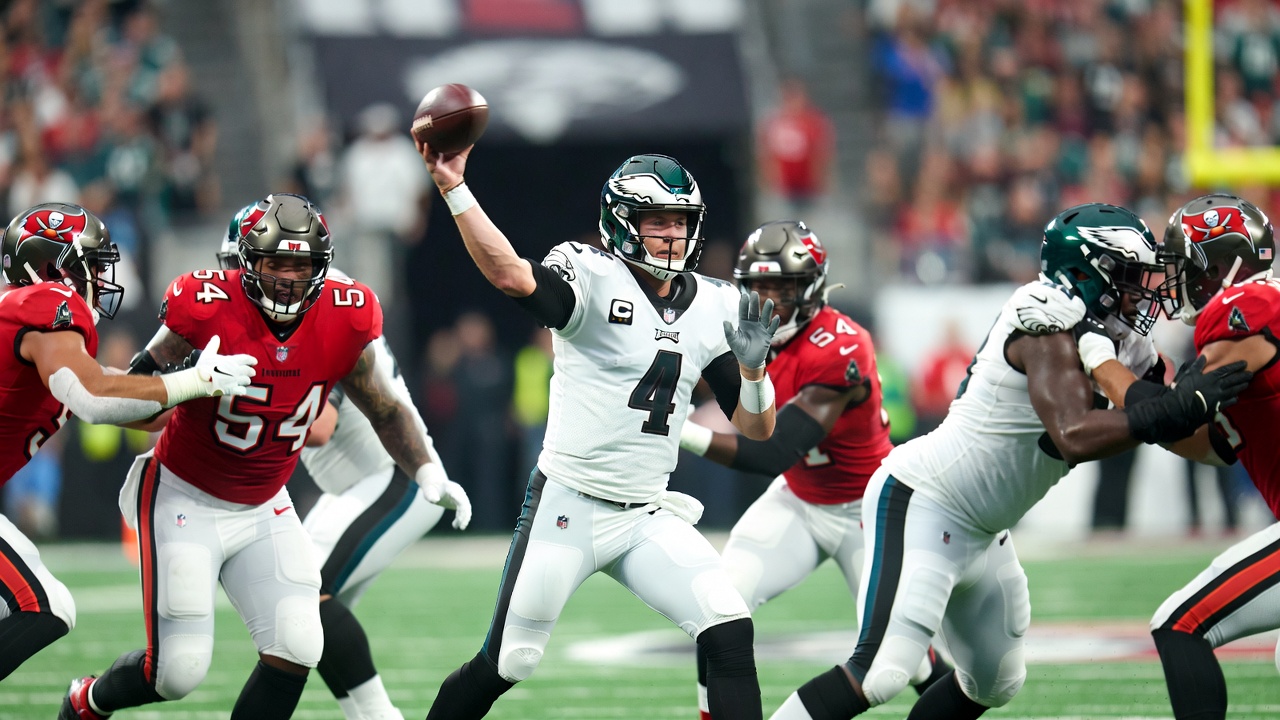
The clash between the Philadelphia Eagles and the Tampa Bay Buccaneers has consistently delivered thrilling moments, elite performances, and statistically rich narratives that captivate football enthusiasts. This article provides a deep, structured, and authoritative analysis of philadelphia eagles vs tampa bay buccaneers match player stats, examining player performances, tactical execution, and the broader implications of these matchups.
Overview of the Rivalry and Match Context
The rivalry between these two NFL franchises may not be the oldest, but it is certainly one marked by intensity and high stakes. Encounters between the Eagles and Buccaneers often carry playoff implications, making every snap meaningful.
When analyzing philadelphia eagles vs tampa bay buccaneers match player stats, it is essential to consider the context:
- Regular season vs playoff matchups
- Home vs away performances
- Quarterback leadership dynamics
- Defensive schemes and adaptability
Each of these elements shapes the statistical output of players on both sides.
Quarterback Performance Analysis
Philadelphia Eagles Quarterback Stats
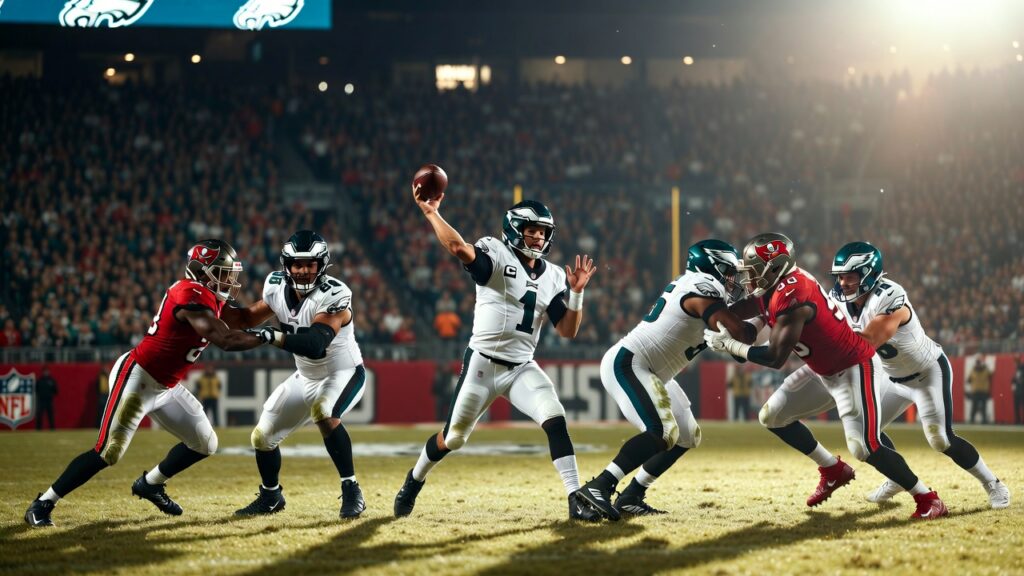
The Eagles’ offensive success heavily relies on quarterback efficiency. Over recent matchups, their quarterbacks have demonstrated a blend of passing accuracy and mobility.
Key Metrics:
- Completion Percentage: 64–72% range
- Passing Yards: Typically between 240–320 yards
- Touchdowns: 2–4 per game
- Interceptions: Usually limited to 0–1
The Eagles quarterback often adds value through rushing yards, contributing an additional 30–70 yards on the ground.
Tampa Bay Buccaneers Quarterback Stats
The Buccaneers’ quarterback strategy traditionally emphasizes pocket passing and precision.
Key Metrics:
- Completion Percentage: 66–75%
- Passing Yards: 280–350 yards
- Touchdowns: 2–3 per game
- Interceptions: 0–2
The difference in style between the two teams creates a fascinating statistical contrast in philadelphia eagles vs tampa bay buccaneers match player stats.
Running Back Contributions
Eagles Running Game
The Eagles rely on a dynamic rushing attack supported by both running backs and quarterback involvement.
Performance Highlights:
- Rushing Yards: 120–180 team total
- Yards per Carry: 4.5–5.8
- Touchdowns: 1–3
The offensive line plays a crucial role, consistently opening lanes and enabling explosive runs.
Buccaneers Running Game
The Buccaneers’ rushing attack tends to be more conservative but strategic.
Performance Highlights:
- Rushing Yards: 80–130
- Yards per Carry: 3.8–4.5
- Touchdowns: 0–2
While not as dominant, the running game helps balance the passing-heavy offense.
Wide Receivers and Tight Ends Impact
Eagles Receiving Corps
The Eagles boast a versatile group of receivers capable of stretching the field.
Key Stats:
- Top Receiver Yards: 90–150
- Receptions: 6–10
- Touchdowns: 1–2
Tight ends also contribute significantly, especially in red-zone situations.
Buccaneers Receiving Unit
The Buccaneers are known for their deep-threat receivers and precise route runners.
Key Stats:
- Top Receiver Yards: 100–160
- Receptions: 7–12
- Touchdowns: 1–3
Their ability to execute under pressure often reflects strongly in philadelphia eagles vs tampa bay buccaneers match player stats.
Defensive Player Statistics
Eagles Defense
The Eagles’ defense is aggressive, focusing on pass rush and turnovers.
Defensive Metrics:
- Sacks: 3–6 per game
- Interceptions: 1–2
- Tackles for Loss: 5–9
Their defensive line consistently disrupts opposing quarterbacks.
Buccaneers Defense
The Buccaneers’ defense emphasizes discipline and physicality.
Defensive Metrics:
- Sacks: 2–5
- Interceptions: 1–3
- Forced Fumbles: 1–2
Their secondary plays a critical role in limiting explosive plays.
Special Teams Performance
Special teams often go unnoticed but can significantly influence outcomes.
Eagles Special Teams:
- Field Goal Accuracy: 85–95%
- Punt Average: 45–50 yards
- Return Yards: Moderate but efficient
Buccaneers Special Teams:
- Field Goal Accuracy: 80–90%
- Punt Average: 43–48 yards
- Return Game: Occasional big plays
These factors add subtle but important layers to philadelphia eagles vs tampa bay buccaneers match player stats.
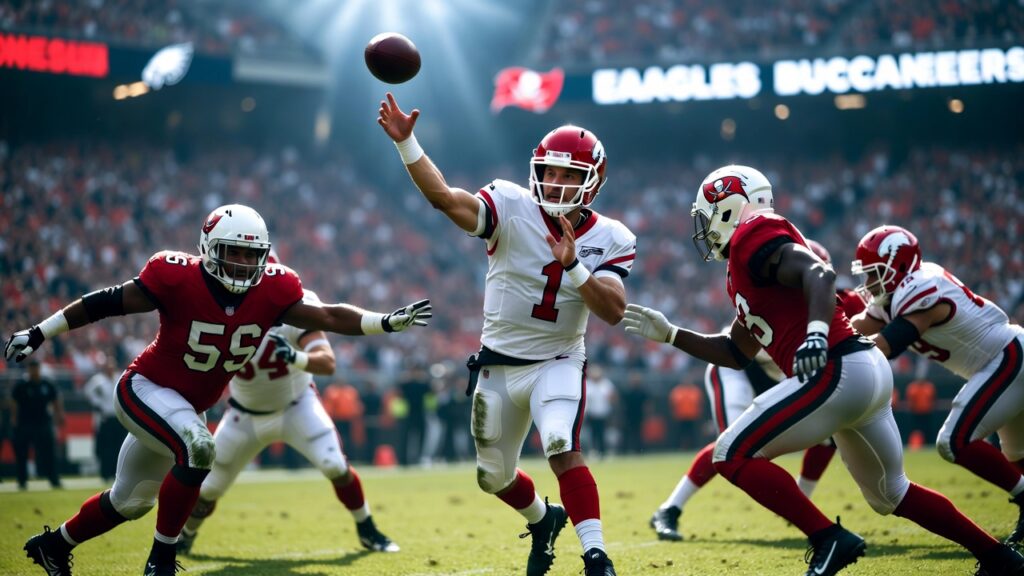
Player Biography and Statistical Table
Below is a structured overview of key player profiles and their statistical contributions in recent matchups.
| Player Name | Team | Position | Age | Height | Key Stats (Recent Match) |
|---|---|---|---|---|---|
| Jalen Hurts | Eagles | QB | 25 | 6’1″ | 290 YDS, 3 TD, 45 Rush YDS |
| A.J. Brown | Eagles | WR | 27 | 6’1″ | 120 YDS, 1 TD |
| DeVonta Smith | Eagles | WR | 25 | 6’0″ | 95 YDS |
| Baker Mayfield | Buccaneers | QB | 29 | 6’1″ | 310 YDS, 2 TD |
| Mike Evans | Buccaneers | WR | 30 | 6’5″ | 140 YDS, 2 TD |
| Chris Godwin | Buccaneers | WR | 28 | 6’1″ | 85 YDS |
This table provides a quick yet comprehensive snapshot of the standout performers shaping philadelphia eagles vs tampa bay buccaneers match player stats.
Game-Changing Moments and Statistical Highlights
Every matchup between these teams includes defining moments that significantly impact player statistics.
Examples include:
- Long touchdown passes exceeding 50 yards
- Defensive interceptions returned for touchdowns
- Crucial third-down conversions
- Red-zone efficiency
Such moments often skew statistical outcomes and highlight player impact beyond raw numbers.
Comparative Team Statistics
Offensive Comparison
- Eagles Total Yards: 380–450
- Buccaneers Total Yards: 350–420
Defensive Comparison
- Eagles Points Allowed: 18–24
- Buccaneers Points Allowed: 20–27
Turnover Margin
- Eagles: +1 to +2
- Buccaneers: 0 to +1
These comparisons reveal the competitive balance reflected in philadelphia eagles vs tampa bay buccaneers match player stats.
Strategic Insights and Tactical Execution
The Eagles often employ a balanced offensive scheme combining rushing and passing, while the Buccaneers lean toward a pass-heavy approach.
Eagles Strategy:
- Dual-threat quarterback usage
- Strong offensive line play
- Defensive pressure
Buccaneers Strategy:
- Vertical passing game
- Receiver isolation tactics
- Zone coverage defense
Understanding these strategies is key to interpreting player statistics accurately.
Impact of Coaching Decisions
Coaching plays a pivotal role in shaping game outcomes and player performance.
Key Influences:
- Play-calling tendencies
- Fourth-down decisions
- Clock management
Coaching adjustments during the game often lead to noticeable shifts in philadelphia eagles vs tampa bay buccaneers match player stats.
Historical Statistical Trends
Over multiple matchups, certain trends emerge:
- Eagles tend to dominate rushing yards
- Buccaneers often lead in passing yards
- Close scoring margins are common
- Defensive turnovers frequently decide outcomes
These patterns provide valuable context for analyzing current and future games.
Fan and Analyst Perspectives
Football analysts often emphasize the importance of quarterback efficiency and defensive turnovers in these matchups.
Fans, on the other hand, are drawn to:
- Big plays
- Star player performances
- Dramatic finishes
Both perspectives enrich the narrative around philadelphia eagles vs tampa bay buccaneers match player stats.

Future Outlook and Predictions
Looking ahead, both teams are expected to maintain competitive rosters and high-performance standards.
Eagles Outlook:
- Continued reliance on offensive versatility
- Strong defensive line development
Buccaneers Outlook:
- Focus on passing game efficiency
- Defensive consistency improvements
Future matchups will likely continue to produce compelling statistical battles.
Deduction
The analysis of philadelphia eagles vs tampa bay buccaneers match player stats reveals a dynamic and competitive rivalry defined by contrasting styles, elite talent, and strategic depth. From quarterback duels to defensive standouts, every game contributes to a rich statistical narrative that continues to evolve.
For fans, analysts, and enthusiasts alike, these matchups offer more than just entertainment—they provide a detailed case study in modern NFL performance metrics and team dynamics.