Practical Tips for Keeping Your Personal Space Clutter-Free
Practical Tips for Keeping Your Personal Space Clutter-Free start with a simple idea: every item needs a sensible home, a useful purpose, or a clear exit route. A tidy room isn’t about owning very little; it’s about making daily life easier to manage.
With a reliable sorting system, practical storage solutions, and small maintenance habits, you can prevent piles from returning without spending every weekend cleaning. The biggest gains usually come from changing how things enter, move through, and leave your space.
Start With a Clear, Small Reset
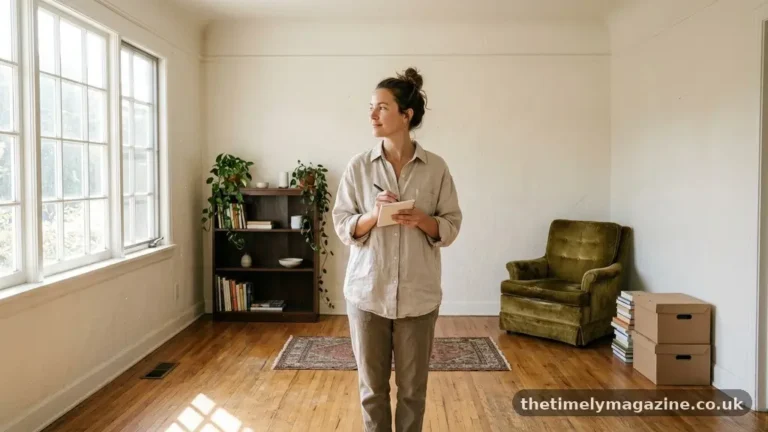
The fastest way to make progress is to choose one contained area rather than attacking an entire home at once. A desk, bedside table, bathroom shelf, or single kitchen drawer gives you a visible finish line and reduces the chance of becoming overwhelmed.
Remove everything from that area and place items on the floor, a bed, or a cleared table. Seeing the full volume matters because clutter often hides in layers: unopened mail beneath books, expired products behind current ones, or cables mixed with stationery.
Use a simple three-part decision process: keep, donate, and discard. The keep-donate-discard method works best when you make a decision for every object instead of creating a large “deal with later” pile that simply becomes new clutter.
- Keep: items you use regularly, genuinely need, or deliberately value.
- Donate: usable belongings that no longer fit your life, space, taste, or routines.
- Discard: broken, expired, stained, unsafe, or unusable items that shouldn’t remain in circulation.
Ask practical questions rather than abstract ones. When did you last use it?
Would you buy it again today? Does it fit the life you actually live, or an imagined version of your schedule?
Sentimental belongings deserve a separate decision, not an automatic pass. Keep the pieces that carry a specific memory, then consider photographing bulky items such as children’s artwork, event decorations, or inherited household objects before letting them go.
Once the area is empty, clean it before returning anything. Dusting a shelf or wiping a drawer while it is clear gives the reset a sense of completion and makes the remaining possessions feel intentional.
Finish by putting the kept items back according to frequency of use. Daily objects should be easiest to reach, weekly items can occupy middle shelves, and occasional belongings can move to higher or less convenient storage.
Use a Sorting System That Makes Decisions Easier
Decluttering becomes less tiring when you use the same rules every time. Without a consistent system, each object can trigger a fresh debate, and the process loses momentum after the first few decisions.
Begin with obvious categories such as clothing, papers, toiletries, electronics, hobby supplies, and kitchen equipment. Sorting by category reveals duplicates more clearly than working room by room; you may not notice that you own too many chargers until they sit together in one place.
Keep a temporary “relocate” container for objects that belong elsewhere. It prevents you from walking repeatedly between rooms, but empty it before finishing the session so the container doesn’t become a permanent holding zone.
For difficult decisions, use a short holding period. Place uncertain items in a labelled box with a review date, then store it somewhere accessible but out of the way. If you haven’t needed anything in the box by that date, the decision becomes easier because real behavior has supplied the answer.
Set Rules for Common Trouble Spots
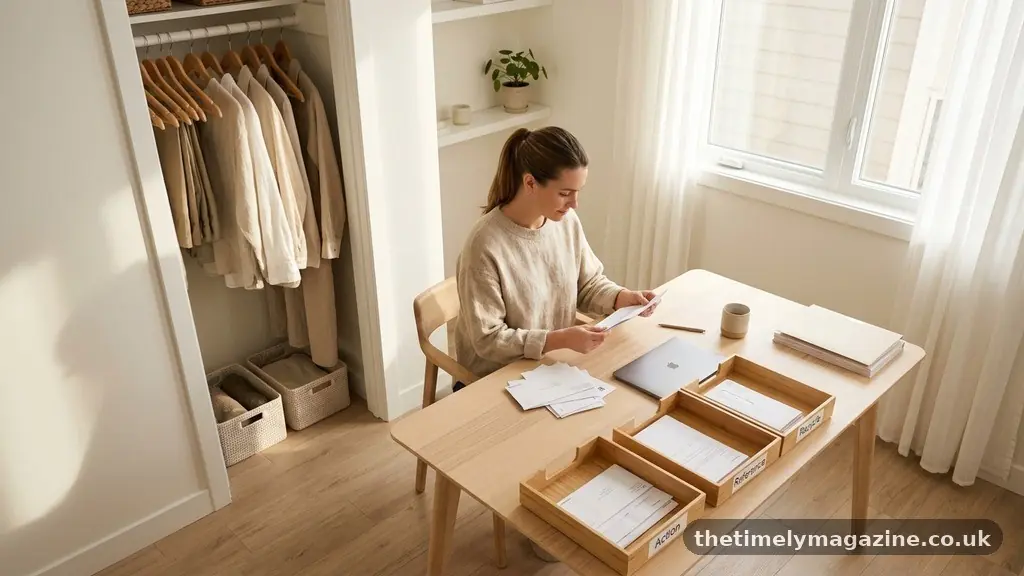
Paper needs an immediate path because it multiplies quickly. Create three destinations: action, reference, and recycling, then handle each piece once instead of moving it from the mailbox to the counter and later to a drawer.
Clothing benefits from a physical capacity limit. If hangers are full and folded garments no longer fit comfortably, the issue is not a folding technique; you have more clothing than the available storage can support.
Kitchen duplicates are another frequent source of excess. Keep the best version of an item you use, such as one reliable vegetable peeler or one set of measuring cups, unless multiple pieces serve a specific household purpose.
Before discarding anything, check whether it contains personal information, batteries, chemicals, or electronic components. Local recycling and disposal rules vary, so use the U.S. Environmental Protection Agency’s advice on reducing and reusing as a starting point for responsible choices.
Don’t create a donation bag without a departure plan. Put it near the door, in your car, or beside the calendar reminder for the charity collection, because an exit pile that remains for weeks is still visual clutter.
Create Organizing Zones Around Real Activities
Organizing zones work better than assigning random locations to individual objects. A zone gathers everything needed for one activity, such as getting ready for work, making coffee, paying bills, or leaving the house.
Build an entry zone near the door for keys, bags, shoes, coats, and outgoing items. A small tray for keys, hooks for frequently used bags, and a designated place for shoes can stop the hallway from becoming a daily dumping ground.
A work zone should contain only the tools needed for current tasks. Pens, notebooks, chargers, and reference materials can stay nearby, while craft supplies, old paperwork, and unrelated equipment move to another location.
In a bedroom, divide storage by the way you dress rather than by arbitrary furniture. Everyday clothing should be easiest to reach, formal wear can occupy a separate section, and seasonal items can move into higher shelves or under-bed storage.
Bathrooms benefit from a daily-use zone and a backup zone. Keep current products in a drawer or caddy, while spare toiletries remain together in a labelled bin so you can see what you already have before buying more.
The same approach applies in a kitchen. Create a breakfast area with coffee, tea, mugs, and related tools, but don’t let it expand to include every appliance used occasionally.
Match Placement to Frequency
Use the “prime real estate” principle: the easiest-to-reach spaces should hold the things you use most often. A mug used every morning deserves a lower shelf, while a roasting pan used twice a year can live in a deeper cabinet.
Store similar items together, but avoid grouping them so tightly that retrieval becomes difficult. A category is only useful if you can remove one thing without causing a small avalanche.
Make return paths obvious for everyone who shares the space. If a basket, hook, or shelf is clearly associated with an item, children, partners, and visitors have a better chance of putting belongings away correctly.
Labels can help, especially in opaque containers or shared storage. A label maker is useful for pantry bins, document boxes, craft supplies, and household maintenance materials, but don’t label every visible shelf if the contents are already obvious.
Review your zones after a week of normal use. If items keep landing on a counter instead of returning to their assigned place, the zone may be too far away, too crowded, or poorly matched to the activity.
Choose Storage That Prevents Hidden Clutter
Storage solutions should make possessions easier to find, use, and return. Buying containers before deciding what you own often creates a neat-looking version of the same problem, with excess items hidden inside attractive boxes.
Measure the space first. Record the width, depth, and height of shelves, cabinets, closets, and gaps before purchasing storage bins or shelving units, because a product that wastes several inches can reduce capacity rather than improve it.
Use vertical storage whenever floor area is limited. Tall shelving, wall hooks, pegboards, and stackable containers can use height effectively, provided heavier items remain low and frequently used items stay within comfortable reach.
Transparent bins work well for supplies you need to identify quickly. Opaque containers are better for visually sensitive areas, but they require labels because memory is unreliable when several boxes look identical.
| Clutter type | Useful storage choice | Placement principle |
|---|---|---|
| Daily accessories | Open tray, hooks, or shallow basket | Keep within one easy reach |
| Seasonal clothing | Lidded storage bins or vacuum bags | Store above or below daily garments |
| Paperwork | Vertical file box with labelled folders | Separate action items from archives |
| Small supplies | Drawer dividers or compartment boxes | Group by activity or type |
| Occasional equipment | Sturdy shelving units | Place heavier items on lower levels |
Drawer dividers are particularly effective because they stop small objects from spreading into unused space. Use them for socks, batteries, cosmetics, stationery, cooking tools, or cables, and assign each compartment a category rather than a single item.
Don’t fill every container to capacity. Leaving some empty space makes it possible to remove one object and return another without rearranging the whole area.
Open shelving has a visual cost. It can look attractive when it holds carefully chosen objects, but too many visible items create visual noise even when each piece is technically organized.
Reserve decorative boxes for belongings you genuinely want to keep. A container shouldn’t become a reason to preserve broken items, outdated documents, or purchases you never use.
Build Maintenance Habits That Take Minutes
Long cleaning sessions usually happen because small decisions were postponed. A daily reset routine keeps those decisions short by returning a room to its baseline before clutter gathers momentum.
Choose a consistent reset point, such as before bed or after dinner. Spend a few minutes returning objects to their zones, clearing surfaces, putting laundry in its proper place, and preparing anything needed for the next morning.
Use a basket for items that need to travel between rooms. Carry it during an ordinary walk through the home, return each object to its destination, and then put the empty basket back where it belongs.
Apply the one-in-one-out rule to categories with limited space. When a new coat, mug, notebook, toy, or pair of shoes enters, one comparable item leaves unless you have intentionally expanded the storage capacity.
This rule works best when the outgoing item is identified before or immediately after the purchase. Waiting until a closet is overflowing makes the replacement decision feel punitive rather than routine.
Control the Flow of New Items
Shopping is part of clutter management. Before buying, ask where the item will live, how often you’ll use it, and whether something you already own performs the same job.
Create a short waiting period for nonessential purchases. The pause doesn’t need to be elaborate; adding an item to a list and revisiting it after a few days often separates a lasting need from a passing impulse.
Mail and deliveries need a fast route. Recycle packaging immediately, open letters near the recycling container, and move important documents to an action folder instead of leaving them on the nearest surface.
Schedule a weekly ten-minute review for the areas that collect clutter fastest. Check the entryway, kitchen counters, desk, laundry area, and bathroom, then deal with the most visible problem before it spreads.
Use a monthly category check for larger systems. One month might focus on pantry supplies, the next on medicine cabinets, and the following month on digital files or seasonal clothing.
Maintenance habits should be realistic for the people using the space. A routine that takes twenty minutes every evening may fail during busy periods, while a shorter reset performed consistently can survive travel, illness, and demanding work weeks.
Include Digital Decluttering in Your Routine
Personal space includes phones, computers, tablets, and cloud accounts. Digital clutter doesn’t occupy floor space, but too many screenshots, downloads, notifications, and duplicate files can consume attention and make useful information harder to locate.
Start with the places that create daily friction. Delete unused apps, remove duplicate photos, clear old downloads, and unsubscribe from emails that you never read.
Use a small number of meaningful folders rather than building a complicated hierarchy. For example, current projects, household records, finances, health, and personal archives may be enough for many people.
Give files names that include the subject and date. “Insurance renewal 2026” is easier to find months later than “scan001,” especially when documents arrive from several providers.
Set a weekly digital reset. Spend ten minutes processing screenshots, downloads, open browser tabs, and new documents before they become an unmanageable backlog.
Photos need boundaries too. Create albums for major events or people, delete obvious duplicates, and avoid keeping five nearly identical pictures simply because storage space is available.
Notifications are a form of visual clutter. Turn off alerts that don’t require immediate action, then keep only the messages that genuinely help you respond to people, appointments, security issues, or important services.
Back up essential records before deleting anything significant. Digital decluttering should reduce noise without risking tax documents, medical information, work files, or irreplaceable photographs.
Adapt the Plan to Shared and Changing Spaces
Keeping a personal space orderly is easier when the system respects real household dynamics. A method that works for one person may fail in a family, shared apartment, or home with pets because more people and activities create different demands.
Separate personal storage from shared storage. Each person can have a labelled drawer, shelf, basket, or closet section, while common areas hold only items that serve the household.
Agree on a few visible rules rather than imposing a long list. For example, shoes stay by the entry, dishes return to the kitchen, and the dining table is cleared before bedtime.
Children need storage they can reach. Low hooks, open baskets, picture labels, and a limited number of toy categories often work better than tall cabinets with complicated doors.
Pets also need designated zones for food, medicines, grooming tools, leads, and toys. Keeping these items together prevents them from migrating across floors, counters, and hallways.
Small homes require careful prioritization, not perfection. Choose furniture with built-in storage, use under-bed space responsibly, and avoid allowing every surface to become an available shelf.
Life changes can make an old system unsuitable. A new job, a baby, a move, remote work, a mobility limitation, or a change in hobbies may require different organizing zones and easier access to certain belongings.
Review your space after a major transition instead of blaming yourself for falling behind. The system may need to be redesigned around your current routines, not repaired through more discipline.
Make Decluttering More Sustainable
Responsible decluttering considers where unwanted items go next. Donating usable belongings is helpful only when the items are clean, functional, and appropriate for the organization receiving them.
Repairing, reusing, selling, recycling, and discarding are different choices. A broken appliance may need an electronics recycling program, while a good-quality coat could be donated or sold.
Avoid using disposal as the only source of relief. Before buying replacements, check whether an item can be repaired, borrowed, rented, repurposed, or shared.
Keep a small outgoing station near the exit, but set a strict limit for it. One bag or box is enough; once it fills, schedule its departure before adding another container.
Be careful with aspirational possessions. Hobby materials purchased for a future project, clothes saved for a hypothetical occasion, and duplicate kitchen tools can occupy valuable space for years without supporting your actual life.
Sentimental decluttering can happen slowly. Choose one category, invite family members into relevant decisions, and preserve the story behind an object through a photograph or written note when keeping the physical item is not practical.
The goal isn’t a showroom. A healthy personal space can contain books, hobbies, decorations, children’s belongings, and evidence of ordinary living while still having clear surfaces and reliable places to put things away.
Frequently Asked Questions
How do I start decluttering when the whole room feels overwhelming?
Choose the smallest visible area, such as one chair, drawer, or section of floor. Set a short timer, remove everything from that area, and use the keep-donate-discard method so you finish with a clear result rather than creating several unfinished piles.
How often should I do a decluttering session?
Use a daily reset for small amounts of maintenance and schedule a focused session every few weeks or once a month. The right frequency depends on how many people use the space, how quickly new items enter, and whether your storage is already close to capacity.
What should I do with items I might need someday?
Ask whether the item is difficult or expensive to replace and whether you can name a realistic situation in which you would use it. If the answer is uncertain, put it in a labelled review box with a future date rather than allowing it to remain mixed with everyday belongings.
Are storage bins enough to solve clutter?
No. Bins contain possessions, but they don’t decide whether those possessions are useful or excessive. Sort first, measure the available space, and buy containers only when they support an easy-to-maintain system.
How can I keep clutter from returning?
Combine a daily reset routine with an entry rule for new purchases, such as the one-in-one-out rule. Give every frequently used item a clear home, process mail and packaging quickly, and review the areas that repeatedly become crowded.
Keep the System Simple Enough to Last
Practical Tips for Keeping Your Personal Space Clutter-Free work best when they reduce decisions rather than demand constant effort. Start with one small area, create organizing zones around real activities, and choose storage that makes returning items almost automatic.
Use a daily reset, limit incoming possessions, and adjust the system when your life changes. A clutter-free space doesn’t require perfect habits; it needs clear homes, realistic boundaries, and a willingness to let unused things move on.