Ways to Make Ordinary Family Gatherings More Memorable
Small choices can turn an ordinary family gathering into a story people retell years later. The best Ways to Make Ordinary Family Gatherings More Memorable usually involve attention rather than expense: a shared ritual, a thoughtful question, a dish connected to family history, or a photograph taken when everyone is genuinely laughing.
A memorable occasion doesn’t need a rented venue or an elaborate schedule. With a few practical ideas, you can create warmth, invite participation across generations, and leave guests with something tangible to remember, whether that’s a handwritten recipe, a funny story, or a keepsake souvenir.
Start with one simple shared moment
The most reliable way to make a gathering memorable is to give everyone one moment they experience together. That might be a welcome toast, a group photograph, a short gratitude circle, or a family story shared before dinner begins.
Keep the ritual brief enough that it feels natural rather than ceremonial. A host could say, “Before we eat, let’s each share one good thing from the past month,” then answer first so guests understand the tone and length expected.
A shared moment works because it creates a clear beginning. People stop checking phones, settle into the room, and recognise that the event is different from a routine visit, even if the menu is simply sandwiches and salad.
Choose a ritual people can repeat
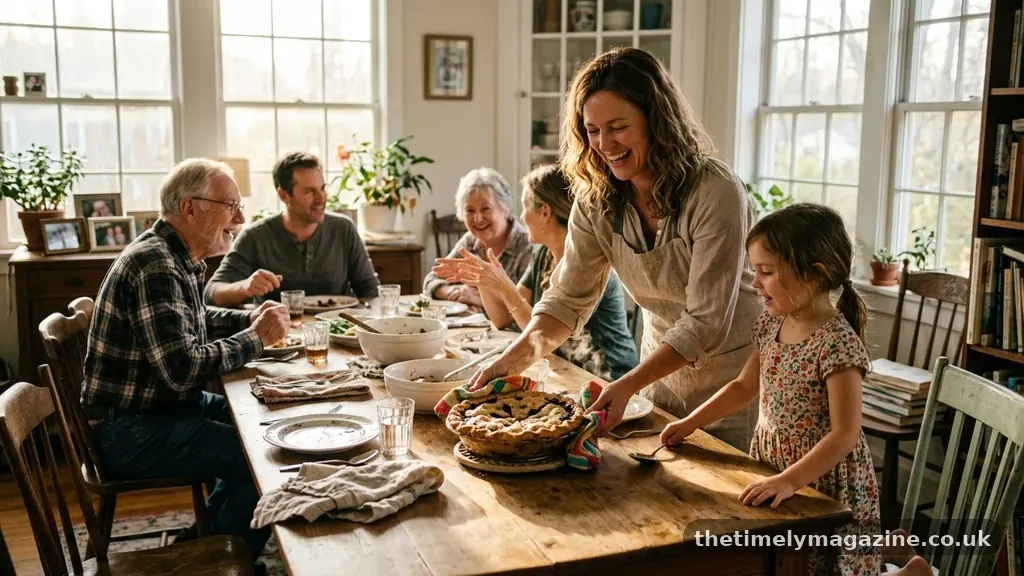
Repeatable family traditions are especially powerful because they build anticipation. A family might serve pie after every summer reunion, play the same song while clearing dishes, or ask the youngest guest to choose the final dessert.
The tradition should be flexible enough to survive changing circumstances. If a gathering moves indoors because of rain, the ritual can continue with a shorter walk through the house, a story round, or a group photo beside the dining table.
Write the ritual down in a shared family calendar or group message. That small act tells relatives the tradition matters and gives future hosts a starting point instead of asking them to invent the whole occasion again.
Make the welcome personal
Personalized invitations can set the mood before guests arrive, even for a casual gathering. A text that says, “Bring the dessert Grandpa used to request,” feels more meaningful than a generic reminder containing only a time and address.
For larger events, include one detail that helps each person feel expected. Mention a child’s favorite activity, ask an uncle to bring his old photographs, or invite a cousin known for baking to contribute one special item.
This kind of preparation is not about creating pressure. It gives people a role and signals that their presence has been considered, which often leads to more relaxed conversation once everyone is together.
Build a meal around participation
Food creates an easy reason for people to gather, but the most memorable meal is not always the most sophisticated one. A potluck menu can be more engaging than catered food because each dish arrives with a person, a memory, or a family connection attached to it.
Ask contributors to add a small note explaining the dish. “Aunt Lina’s winter beans” or “the noodles we ate after soccer practice” gives guests a reason to ask questions, and those questions often lead to stories that would not emerge during ordinary conversation.
Keep the menu manageable by assigning categories rather than demanding exact recipes. One household might bring a main dish, another vegetables, another bread, and another fruit or dessert, while the host handles drinks and serving supplies.
Turn recipes into conversation
A recipe exchange can become a gentle activity during or after the meal. Print or write several family recipes on cards, place them near the food, and encourage people to add substitutions, preparation memories, or the name of the person who first made each dish.
Older relatives often remember practical details that never appear in a formal recipe. They may explain why a sauce was stirred with a wooden spoon, why a particular pan was used, or how a family adapted a dish when an ingredient was unavailable.
Collect copies in a folder or digital document after the event. The finished collection becomes more valuable when it includes small notes such as “serve this on the porch” or “best made while listening to jazz,” rather than only ingredient lists.
Design the table for conversation
Seating can shape the entire evening. Place people who don’t see each other often beside one another, but avoid isolating guests who need extra support or would feel uncomfortable with unfamiliar company.
Use the table as a prompt rather than a display piece. A handwritten question at each place setting, such as “What family meal do you remember most clearly?” gives quieter guests an opening without forcing anyone to perform.
Small visual details also help the meal feel intentional. Name cards, seasonal flowers from a garden, DIY decorations made by children, or old family photographs beneath clear table mats can start conversations before the first course arrives.
Plan activities that include different ages
One of the hardest parts of a multigenerational gathering is finding an activity that doesn’t exclude half the room. The answer is usually a menu of short options rather than one long game that everyone must play from beginning to end.
Intergenerational activities work best when age, speed, and physical ability aren’t the only ways to succeed. A child can draw clues, a grandparent can identify a song, and a teenager can record answers or explain the rules of a game.
Offer an activity, then let people join gradually. Guests often participate more willingly when they can watch one round first instead of being placed immediately in the centre of attention.
Use collaborative games
Collaborative games create a shared goal without turning relatives into rivals. Teams can assemble a family timeline, identify songs from different decades, complete a picture puzzle, or create a humorous group story one sentence at a time.
A family treasure hunt can use clues based on harmless memories: “Find the room where the annual birthday cake was once dropped,” or “Locate the photograph showing three generations in one frame.” These prompts make the house itself part of the experience.
Keep the rules visible and the rounds short. If one game lasts more than thirty minutes, offer a natural stopping point so guests can return to conversation, food, or another activity without feeling trapped.
Offer movement without making it mandatory
Outdoor activities provide a useful change of pace when the gathering takes place near a garden, park, beach, or safe walking route. A short nature walk, lawn bowling, sidewalk chalk area, or casual photo scavenger hunt can draw people out of their seats.
Plan an indoor alternative for guests with limited mobility, young children who need rest, or anyone who prefers not to be outside. A window-side bird-spotting station, a puzzle table, or a family film with shared snacks can serve the same purpose.
Think in terms of invitations rather than obligations. “We’re walking to the corner at three if anyone wants to come” feels welcoming, while announcing that everyone must participate can make a relaxed gathering feel like a scheduled programme.
| Activity | Best for | Preparation | Memory it creates |
|---|---|---|---|
| Family timeline | Mixed ages and history lovers | Paper, pens, selected dates | Shared understanding of family milestones |
| Recipe exchange | Cooks and storytellers | Recipe cards or a shared folder | A practical record of family food traditions |
| Photo scavenger hunt | Children, teens, and adults | Prompt list and a phone or camera | Unexpected images from the day |
| Song guessing game | Music-loving groups | Shared playlist and speaker | Stories linked to different generations |
Make room for stories and listening
Conversation rarely becomes meaningful by accident in a crowded room. Storytelling prompts help guests move beyond updates about work, traffic, and the weather without making the discussion feel like an interview.
Choose prompts that invite memories rather than test family knowledge. “What was your first job?” is often more fruitful than “What year did that happen?” because it encourages details about people, places, mistakes, and unexpected turns.
Place four or five prompts in a bowl and let guests draw them during dessert. People should always be free to pass, especially when a question touches on grief, conflict, finances, or another private subject.
Preserve the voices behind the stories
With permission, record a short audio story on a phone. A two-minute account of a first apartment, a childhood holiday, or a family business may become more precious than a polished speech because the speaker’s voice and pauses remain part of the memory.
Don’t turn the gathering into a formal recording session. Ask before recording, stop if the person seems uncomfortable, and avoid posting anything publicly unless everyone shown or heard has clearly agreed.
You can also invite guests to write a memory privately. A memory jar filled with notes such as “the funniest thing that happened on a road trip” can be read aloud later or saved for another reunion.
Include stories beyond the family tree
Not every guest needs to be related by blood to belong in the conversation. Long-time neighbours, close friends, partners, and chosen family often hold important memories that enrich the group’s understanding of one another.
Ask questions that allow different kinds of experience to surface. Someone might describe how they met the family, the first meal they shared, or a moment when a relative helped them, rather than recounting ancestry or childhood history.
Pay attention to who is speaking most. A warm host can redirect gently by saying, “I’d love to hear what the younger cousins remember about that,” giving less vocal guests a clear opening without embarrassing anyone.
Use atmosphere to make the day feel distinct
Memories are tied to sensory details, so atmosphere matters more than many hosts realise. A shared playlist, a particular scent from the kitchen, coloured lights on a patio, or the sound of a familiar board game can bring the gathering back to mind months later.
Choose music that supports conversation rather than competing with it. Build a playlist with contributions from several generations, and ask each person to add one song connected to a journey, celebration, school dance, or favourite family place.
Volume should change with the event. Quieter music during dinner allows stories to travel across the table, while livelier songs can signal a later shift toward dancing, cleaning up, or outdoor games.
Create a family photo booth
A family photo booth doesn’t need expensive equipment. A blank wall, a chair, good natural light, and a small basket of meaningful props can provide enough structure for playful photographs.
Use props connected to the family rather than generic costumes. An old hat, a wooden spoon, a sports scarf, a suitcase, or a framed copy of a historic photograph can prompt people to explain where the object came from.
Offer both posed and informal options. Some guests will enjoy a dramatic group picture, while others may prefer a quiet photograph with one sibling, a grandparent, or a child.
Decorate with objects that carry meaning
DIY decorations can make a room feel personal without creating a large expense or a stressful craft project. Children might draw place cards, guests can bring paper flowers, or relatives can write one-word wishes on strips of coloured paper.
Display objects carefully and label them when their history isn’t obvious. A small card explaining that a bowl belonged to a great-grandparent gives guests an immediate reason to ask about it.
Avoid covering every surface. A few meaningful objects create better conversation than a crowded room where photographs, food, and decorations compete for attention.
Give everyone a role without creating pressure
Memorable gatherings feel shared because guests contribute to them. One person can host, but one person shouldn’t have to cook, entertain, photograph, organise children, answer the door, and clean every dish.
Assign roles based on preference rather than age or traditional expectations. A teenager might manage the shared playlist, a relative with limited mobility might welcome guests, and a confident cook might supervise the potluck menu.
Make responsibilities specific. “Can you bring drinks?” is less clear than “Could you bring sparkling water, juice, and enough cups for the children?” Clear requests prevent duplicated effort and reduce last-minute stress.
Include children in visible ways
Children remember gatherings when their work is noticed. Invite them to create DIY decorations, interview relatives with prepared questions, choose a song, or make a sign for the family photo booth.
Give them jobs that have a real effect on the event. Passing out recipe cards or placing memory jar notes on the table feels more meaningful than assigning a pretend task that adults immediately redo.
Build in room for imperfect results. A crooked banner or a child’s enthusiastic announcement can become one of the details adults remember most fondly, especially when the child sees that the contribution genuinely mattered.
Respect different needs
Accessibility is part of hospitality, not an optional extra. Check seating, lighting, noise, bathroom access, food allergies, and travel arrangements before the gathering rather than waiting for a guest to struggle.
Provide a quiet corner where someone can step away from conversation. This helps older guests, babies, people with sensory sensitivities, and anyone who simply needs a few minutes without requiring them to leave the event.
Food choices deserve the same care. Label dishes, keep allergen-sensitive items separate when possible, and make sure a guest with dietary restrictions has a satisfying meal rather than a token side dish.
Turn the gathering into something people can keep
A physical reminder helps an event continue after the final goodbye. Keepsake souvenirs don’t need to be expensive; their value comes from their connection to the particular people and day.
Guests could take home a recipe card, a printed photograph, a small packet of garden seeds, a child’s illustrated place card, or a note containing a story shared during dinner. Choose one item that can be made or prepared without overwhelming the host.
If you print photographs, wait until after the gathering and select images that show genuine connection rather than trying to give every person a formal portrait. A group laughing over a failed game can say more about the day than a perfectly arranged lineup.
End with a deliberate closing
A gathering benefits from a gentle ending just as it benefits from a clear beginning. Ten minutes before guests leave, invite everyone to share a favourite moment, write a note for the memory jar, or take one final group photograph.
The closing question can be simple: “What should we do again next time?” Answers provide useful feedback and may reveal which moments mattered most, whether that was the recipe exchange, the garden walk, or a conversation between two relatives who rarely speak.
Thank people for their specific contributions. Mention the dessert someone made, the playlist another person assembled, or the way a child welcomed guests, so appreciation feels genuine rather than automatic.
Keep the memory alive afterward
Send a short message within a few days with one photograph and one remembered quote. A note such as “We’re still laughing about the dramatic song guessing round” reconnects people to the emotional centre of the event.
Share recipes, recordings, or photographs only with appropriate permission. A private family folder, printed album, or group message can preserve the material without placing personal moments on public social media.
Use the next gathering to build on what worked. If guests loved the timeline, add new milestones; if the outdoor activity was too ambitious, shorten it; if the memory jar filled quickly, read selected notes at the next meal.
Practical plans for different kinds of gatherings
A memorable gathering can be designed around the occasion without becoming predictable. A birthday might centre on stories from each decade of the guest of honour’s life, while a reunion could use a family map, old photographs, and a potluck menu organised by region.
For a holiday meal, choose one fresh element instead of replacing every familiar custom. Add a gratitude circle before dessert, invite guests to contribute songs to the shared playlist, or create a recipe exchange featuring the dishes everyone asks about each year.
Even a weekday visit can have a small point of focus. A themed dinner based on a favourite film, a “bring something from your childhood” evening, or a short neighbourhood walk can make an ordinary meeting feel intentional.
| Gathering type | Memorable feature | Low-stress preparation |
|---|---|---|
| Birthday | Memory round about the guest of honour | Prepare five prompts and one display table |
| Holiday meal | Shared ritual before dessert | Use an existing family tradition with one small variation |
| Family reunion | Timeline, photo booth, and recipe exchange | Assign one coordinator for each activity |
| Casual weekend visit | Themed dinner or short outdoor activity | Choose one focus and keep the rest informal |
For guidance on preserving and organising family photographs, the Library of Congress Prints and Photographs Online Catalog offers a useful example of how images can be described and arranged for future reference.
Budget matters, too. Use what is already in the home, borrow equipment, ask guests to contribute materials, and choose an activity that depends on attention rather than purchases.
FAQ
How many activities should a family gathering have?
One planned activity and one optional activity are usually enough for a small gathering. Too many scheduled events can prevent natural conversation, so leave open time for eating, resting, and spontaneous storytelling.
How can I include relatives who don’t enjoy games?
Offer different ways to participate, including listening to stories, choosing music, displaying photographs, writing memory jar notes, or helping with food. Make games optional and avoid presenting quiet participation as a lack of enthusiasm.
What makes a family tradition last?
A lasting tradition is easy to repeat, meaningful to the group, and flexible when circumstances change. A short toast, annual recipe, shared photograph, or closing question is more sustainable than an elaborate ritual that requires extensive preparation.
How do I make a gathering memorable on a small budget?
Focus on personal details rather than decorations or entertainment. Use a shared playlist, storytelling prompts, homemade food, old photographs, a neighbourhood walk, or handwritten notes to create connection without a major expense.
How can I avoid making guests feel forced to participate?
Explain the activity warmly, demonstrate it yourself, and allow people to watch or pass. Flexible invitations work better than compulsory turns, particularly when guests have different ages, personalities, energy levels, or comfort with public speaking.
Make the next gathering matter
The strongest Ways to Make Ordinary Family Gatherings More Memorable are often modest: ask a better question, serve a meaningful dish, give someone a role, or pause long enough for a real story. Choose one shared ritual and one personal detail for your next event, then let the rest unfold naturally.
Memories grow from attention, not perfection. If guests leave feeling included, heard, and connected to one another, the gathering has already become something worth repeating.