How to Create a Comfortable Reading Corner in a Small Room
Creating a Comfortable Reading Corner in a Small Room is less about adding more furniture and more about making a few thoughtful choices. The right seat, useful lighting, and carefully planned storage can turn an overlooked corner into a place you genuinely want to use.
A successful reading nook should feel calm without blocking movement or making the room seem crowded. With the right proportions, layered light, and a few personal details, even a narrow bedroom, studio apartment, or compact living room can support an inviting daily reading habit.
Start With the Right Spot
The best location for a small-room reading corner is usually an underused edge rather than the centre of the room. Look beside a window, at the end of a sofa, in an empty bedroom corner, or near a wall that currently holds no useful furniture.
Natural light makes a window area appealing during the day, but direct sun can create glare and fade upholstery over time. A spot beside—not directly in front of—the window often offers a better balance of brightness, privacy, and flexibility.
Before buying anything, mark the proposed footprint with painter’s tape or folded newspapers. Include the chair, a small table, and the space needed to pull the chair out, then walk around it several times to check whether doors, drawers, and pathways still work.
A practical reading corner needs enough room for your body, your book, and the chair’s movement. As a planning rule, allow roughly 30 to 36 inches of clear walking space along a frequently used route, although the exact requirement depends on the room and household.
Pay attention to outlets, radiators, vents, and switches. A beautiful corner becomes frustrating if the reading lamp needs an extension cord across the floor or if the chair sits directly over a heating vent.
| Possible location | Main advantage | Potential problem | Useful solution |
|---|---|---|---|
| Beside a window | Daylight and a pleasant view | Glare or temperature changes | Use sheer curtains and an adjustable lamp |
| Bedroom corner | Quiet and private | Limited floor area | Choose a narrow chair and wall storage |
| Living-room edge | Easy access and shared use | Noise and visual clutter | Define the nook with a rug or floor lamp |
| Unused wall recess | Efficient use of awkward space | May lack natural light | Add layered ambient lighting |
Think about sound as well as size. A corner beside a television or kitchen may look ideal but prove unsuitable for long reading sessions, while a small space near a bedroom window may become a peaceful retreat with only modest changes.
Choose Seating That Fits Your Body and Room
Seating determines whether the corner feels like a real retreat or merely a decorative arrangement. A comfortable armchair is often the simplest choice, but it should be measured carefully rather than selected only for its appearance.
Record the chair’s width, depth, and height before bringing it home. In a small room, a chair around 28 to 32 inches wide may fit more easily than a broad lounge model, but the right dimensions depend on the available wall and the reader’s build.
The seat should support an upright, relaxed posture without forcing your knees sharply upward. Your feet should rest comfortably on the floor, and your lower back should feel supported after several pages rather than only during a five-minute test.
Ergonomic seating matters even for leisure reading. The Canadian Centre for Occupational Health and Safety’s chair guidance explains why seat height, back support, and foot positioning affect comfort during sustained sitting.
Try the chair with a book in your hands. A seat that feels soft in a showroom may allow your hips to sink too low, tilt your head forward, or make it difficult to change position.
Alternatives to a Full Armchair
A compact slipper chair can provide a supportive back without taking up the deep footprint of a recliner. A small upholstered dining chair with a cushion can work in a bedroom, especially when paired with a soft throw pillow behind the lower back.
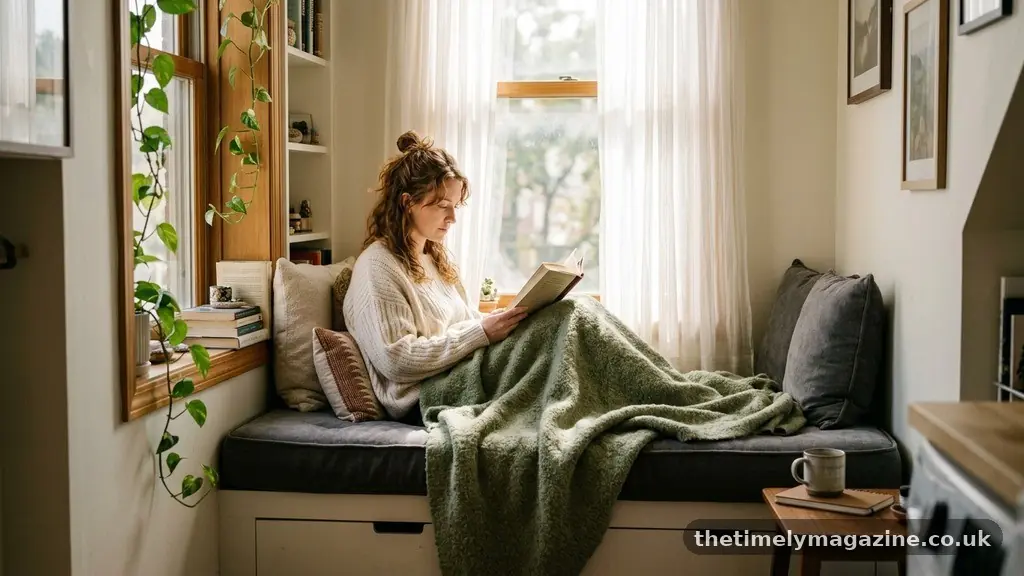
Built-in benches and window seats are useful where floor space is scarce. Add a firm seat cushion, a back cushion, and a cozy blanket, but check the seat depth because a very deep window seat can leave shorter readers unsupported.
An ottoman can double as a footrest and extra seating, although it should not block the doorway or become a surface that collects laundry. A low pouf is flexible, while a narrow upholstered stool takes less visual space.
- Measure the chair’s full width, depth, and height.
- Check that your feet can rest comfortably on the floor.
- Test the seat while holding a book at your normal reading distance.
- Leave enough clearance to stand without striking a table or wall.
- Choose washable or replaceable covers if the corner will receive daily use.
Keep the chair visually light when the room already contains substantial furniture. Tapered legs, exposed wood, open sides, or a pale upholstery colour can make compact furniture feel less imposing than a bulky chair with a skirted base.
Build Lighting in Layers
Good lighting prevents eye strain and lets the reading corner work after sunset. One bright ceiling fixture rarely provides the right angle, so combine ambient lighting for the room with focused light for the page.
A reading lamp should sit close enough to illuminate the book without shining directly into your eyes. For a right-handed reader, placing the lamp slightly to the left can reduce shadows cast by the writing hand; left-handed readers may prefer the opposite arrangement.
An adjustable floor lamp is useful if the chair changes position or the corner serves more than one person. Choose a slim base that can slide beside the chair, and make sure the shade can direct light downward rather than spreading glare across the room.
A small table lamp works well on a side table, but the table must be stable and tall enough to keep the light near shoulder level. A clip-on reading lamp can save floor space, although its clamp should not damage shelving or upholstery.
Use warm, comfortable illumination rather than a harsh blue-white beam. Many readers prefer a warm white bulb around 2700K to 3000K, while dimmable controls make it easier to adjust the mood and brightness for different times of day.
Layering also improves the room’s overall atmosphere. Soft lighting from a lamp, gentle ambient lighting from a nearby fixture, and natural daylight during the afternoon create a more adaptable space than a single overhead source.
Reduce Glare and Shadows
Glossy white walls, glass tabletops, and uncovered bulbs can reflect light into your eyes. Matte finishes, fabric shades, and lamps positioned beside rather than behind the book generally produce a calmer visual field.
Do not point a lamp straight at a tablet or e-reader. The screen should be bright enough to read without competing with a much brighter lamp, and curtains or blinds can help prevent a window from reflecting across the display.
Keep cords tight to the wall and away from feet. Cord covers, adhesive clips, or a lamp with a built-in rechargeable battery can preserve both safety and the clean appearance that makes a small room feel more spacious.
Use Walls and Vertical Space Wisely
Floor storage is often the first thing that makes a small reading corner feel crowded. A wall-mounted bookshelf can hold a useful selection of books without consuming the footprint required by a freestanding bookcase.
Floating shelves are especially effective when installed above or beside the chair. Two or three narrow shelves can display current reads, a small plant, and a few personal objects while leaving the floor open underneath.
Keep shelves within comfortable reach. A reader should not need to stand on a chair to retrieve a frequently used book, and heavy hardbacks should be placed on securely anchored shelves rather than lightweight decorative ledges.
Use vertical storage selectively. Filling every inch of wall with books can make the corner feel compressed, so leave some visible wall area around the shelves and arrange books with a little breathing room.
A shallow wall cabinet can conceal chargers, reading glasses, notebooks, and remote controls. Closed storage is valuable when the surrounding room already contains many visible objects, while open shelves make a small nook feel more personal and accessible.
Make Storage Do More Than One Job
A side table with a drawer can hold bookmarks and cables while providing a surface for tea. An ottoman with hidden storage can contain blankets, magazines, or children’s books without adding another piece of furniture.
Use a narrow basket beside the chair for books in progress, but limit its capacity. Once the basket overflows, the reading corner starts to look like a general storage area rather than a restful destination.
Books can also become part of the room’s visual balance. Grouping tall books together, placing a few covers face-out, and leaving small gaps between categories creates order without making the arrangement feel rigid.
For renters, removable hooks and freestanding leaning shelves can provide flexibility, but always follow the manufacturer’s weight limits. Heavy shelves require proper wall anchors, especially in homes with children or pets.
Create Comfort With Texture and Colour
Texture helps distinguish a reading nook from the rest of a small room. A seat cushion, a throw pillow, and a cozy blanket can make a simple chair inviting without requiring a major renovation.
Choose textiles that support the way you read. A firm cushion helps an upright chair feel more supportive, while a soft lumbar pillow can fill the gap between your lower back and a deep seat.
A small rug can visually define the corner and soften footsteps, especially in a living room with hard flooring. It does not need to extend far beyond the chair, but the front legs of the chair should sit securely on it if possible.
Colour can establish a quiet mood without darkening the whole room. A muted green, warm cream, dusty blue, or terracotta accent can identify the reading area while maintaining a connection with the walls and larger furniture.
Do not overload the corner with matching accessories. One patterned pillow, a textured blanket, and a simple lamp may create more warmth than a collection of decorative items competing for attention.
Washability matters in a frequently used space. Removable covers, durable woven fabric, and a blanket that can go into the laundry make the nook easier to maintain, particularly if it is used for snacks, tea, or family reading.
Add Personality Without Clutter
Choose objects that support the reading experience rather than merely occupying a surface. A small framed print, a ceramic cup for bookmarks, or a plant that tolerates the available light can make the corner feel connected to the person who uses it.
Plants need careful placement near books and upholstery. Keep watering containers on a protected surface, avoid blocking the lamp, and choose a non-toxic variety if pets or young children can reach the leaves.
Personal touches should remain easy to move. A reading corner may need to change as the room’s function changes, so avoid permanent arrangements that make the chair difficult to reposition or the shelves impossible to access.
Plan the Layout Around Movement
Small room design works best when every object respects the room’s main paths. The chair should face a pleasant direction, but it should not force people to walk around its widest point every time they enter the room.
Angle the chair slightly toward the window, bookshelf, or centre of the room rather than pushing it flat against a wall automatically. A modest angle can make the corner feel more intentional and improve access to a side table.
Keep the table close enough to reach without leaning forward. At the same time, avoid placing it so near the chair that the armrest touches it whenever you sit down.
Scale matters more than matching furniture. A petite round table may be easier to use than a rectangular coffee table, while a narrow C-table can slide beneath the chair’s arm and disappear when it is not needed.
Consider the room’s changing uses. If the corner shares space with a desk, guest bed, or dining area, choose movable pieces that can be shifted without heavy lifting.
| Item | Compact choice | Why it helps |
|---|---|---|
| Seating | Slipper chair or narrow armchair | Provides back support with less depth |
| Surface | Round side table or C-table | Offers a place for a drink without sharp corners |
| Book storage | Floating shelves or shallow wall cabinet | Keeps the floor clear |
| Lighting | Slim floor lamp or clamp lamp | Uses less space than a wide table lamp setup |
| Foot support | Small ottoman or foldable footstool | Improves comfort when not in use as storage |
Use a visual boundary if the corner feels lost in a larger room. A small rug, a distinctive wall colour, or a floor lamp can signal that this is a dedicated place for reading without adding a bulky divider.
Leave enough clearance to clean underneath and behind the furniture. Dust collects quickly in tight corners, and a chair that cannot be moved makes routine cleaning more difficult than it needs to be.
Keep the Corner Affordable and Flexible
You do not need to purchase every component at once. Start with the seat and a safe reading lamp, then add storage and decorative details after you have used the corner for a week.
Second-hand furniture can be an excellent source of compact pieces. Look for solid construction, cleanable upholstery, and dimensions that fit the space rather than choosing an item simply because the price is attractive.
A new cushion can refresh a plain chair, while paint can give an inexpensive side table a more deliberate appearance. Avoid buying a cheap piece that wobbles, smells strongly of chemicals, or cannot support normal daily use.
Prioritise spending according to contact and function. The chair, lamp, and any safety-related hardware deserve more attention than decorative accessories that can be replaced later.
Make the layout reversible wherever possible. A chair that can move to another room, a lamp that can serve as general lighting, and shelves that can hold objects beyond books will remain useful if your household needs change.
- Begin with a measured floor plan rather than browsing furniture first.
- Buy or repurpose the seating before choosing textiles.
- Test the lamp at the exact height and angle needed for reading.
- Add one storage solution before adding decorative objects.
- Reassess the corner after several real reading sessions.
Try the arrangement at different times of day. A corner that feels perfect in bright afternoon light may need another lamp at night, and a location that seems quiet early in the morning may be too close to a busy household route later.
Make the Nook Easy to Use Every Day
Comfort is partly a matter of convenience. If the book, glasses, charger, and blanket all have a home within arm’s reach, you are more likely to sit down and read instead of postponing the habit.
Keep a small tray on the side table for items that travel with you. The tray can be removed when the surface is needed for a drink, and it prevents small objects from spreading into the surrounding room.
Choose a book-return routine. Finished books can go straight to the wall-mounted bookshelf, while unfinished books stay in a designated basket or on one shelf so the chair does not become a permanent pile.
Protect the corner from competing tasks. Avoid turning the chair into a place for unfolded laundry, work bags, or unopened mail, because those objects change the emotional purpose of the space.
Clean the lamp shade, vacuum the rug, and wash removable textiles regularly. Dust on a light source can reduce brightness, while crumbs and grit can shorten the life of upholstery and make the nook feel less inviting.
Refresh rather than replace. Moving the chair toward seasonal daylight, changing one pillow cover, or rotating a few books can make the corner feel new without consuming additional floor area.
Frequently Asked Questions
What is the smallest space needed for a reading corner?
There is no universal minimum because chair dimensions and room circulation vary. A narrow chair, compact lamp, and wall storage can work in a surprisingly small area, provided you can sit comfortably, stand safely, and keep the main walkway clear.
Should a reading chair face the window?
It can, but facing directly into a bright window may cause glare and make daytime reading uncomfortable. Positioning the chair at an angle often provides natural light and a view while allowing curtains, blinds, or a lamp to control brightness.
What lighting is best for reading?
Use focused light directed onto the page or screen, supported by softer ambient lighting in the rest of the room. A dimmable floor lamp or adjustable reading lamp is usually more flexible than relying on a fixed overhead fixture.
How can I store books without using floor space?
Install floating shelves, a wall-mounted bookshelf, or a shallow cabinet where the wall can safely support it. Keep heavier books on properly anchored shelves and place your current reads within easy reach.
How do I make a reading corner comfortable without making the room look cluttered?
Limit the area to a few purposeful pieces: supportive seating, one useful surface, appropriate lighting, and restrained storage. A single blanket, pillow, and personal object can add warmth while leaving enough open space for the room to breathe.
Bring the Corner Together
Creating a Comfortable Reading Corner in a Small Room starts with measurements, clear walkways, and a chair that genuinely supports your body. Add focused lighting, vertical storage, and a few washable textiles rather than filling the space with accessories.
Begin with the location and seating today, then test the arrangement through several reading sessions before making further purchases. A small room can hold a deeply personal reading retreat when every item earns its place.