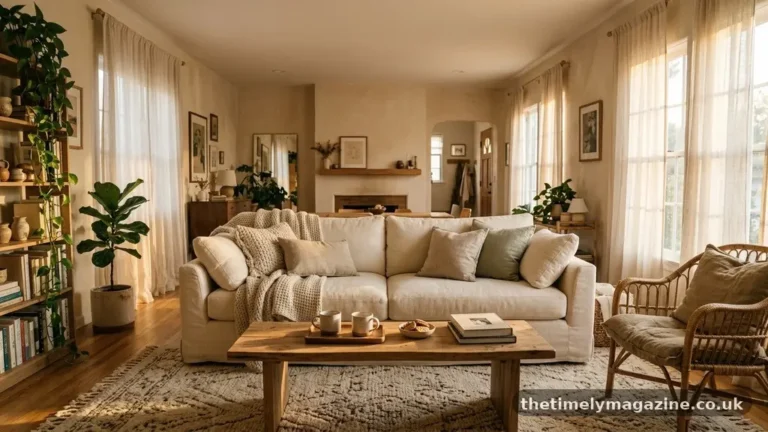
The Difference Between Minimalism and Simple Living
The difference between minimalism and simple living is easy to blur, but the two ideas are not identical. Minimalism focuses mainly on reducing possessions, commitments, and distractions so that the essential becomes easier to see. Simple living is broader: it shapes work, money, relationships, food, technology, and time around personal values.
Both can improve quality of life, but neither requires a bare apartment or a strict set of rules. The useful distinction is not how little you own; it is what you’re trying to make room for and how deliberately you choose your habits.
The Core Difference
Minimalism is a practice of intentional reduction. A minimalist may examine clothing, furniture, subscriptions, digital files, and social obligations, then remove what feels excessive or unhelpful. The aim is usually clarity: fewer objects to maintain, fewer choices to process, and fewer distractions competing for attention.
Simple living takes a wider view. It asks whether the shape of your life reflects what matters most, even when that includes possessions, a demanding career, children, travel, or a busy creative practice. Someone can live simply in a comfortable home if their spending, schedule, and commitments are guided by clear priorities rather than constant pressure to acquire more.
Minimalism is often about subtraction; simple living is about alignment. The first commonly begins with decluttering, while the second may begin with questions such as, “What does enough look like for my household?” or “Which activities leave me feeling grounded rather than scattered?”
Picture two households. The first owns 40 items of clothing, keeps a nearly empty living room, and still works overtime to fund frequent upgrades to expensive technology.
The second has books, heirlooms, gardening tools, and a well-used kitchen, but spends carefully, protects evenings, and avoids purchases that do not support family life. The first may look minimalist, while the second may be practicing simple living.
There is considerable overlap. Both approaches can resist consumerism, encourage mindful consumption, and make room for relationships or rest. Yet minimalism can become focused on visible order, whereas simple living is usually judged by the coherence of the whole life.
| Area | Minimalism | Simple living |
|---|---|---|
| Main question | What can I remove? | What supports the life I value? |
| Typical starting point | Decluttering possessions or commitments | Clarifying priorities and defining enough |
| Visible result | Less stuff, visual noise, or digital clutter | A calmer and more values-led pattern of living |
| Possible risk | Turning deprivation into a measure of success | Using “simple” as an excuse to avoid needed change |
What Minimalism Really Involves
Minimalism is not simply owning a small number of objects. A person might own hundreds of tools for a trade, musical instruments for a serious hobby, or children’s equipment that is used every week and still make minimalist choices. The key is that possessions have a clear purpose and are not accumulating by default.
Decluttering works best when it is specific rather than dramatic. Instead of emptying every cupboard, you might review duplicate kitchen utensils, clothes that no longer fit, old paperwork, or decorations stored in boxes you have not opened for years. Each category gives you a manageable decision and a visible result.
Minimalism also applies beyond the physical home. Digital minimalism may involve removing unused apps, silencing nonessential notifications, leaving inactive online groups, or keeping the phone outside the bedroom. These choices reduce interruptions without requiring a lifestyle that looks sparse to anyone else.
A minimalist approach can also reduce decision fatigue. A small capsule wardrobe, for example, makes weekday dressing faster because the pieces coordinate and already suit the wearer’s real routine. The point is not to copy a fixed number of garments; it is to stop spending energy on clothes that create more decisions than value.
There is a psychological difference between choosing less and feeling deprived. If a person gives away books because they genuinely prefer a digital library, that may feel freeing. If they discard treasured books to meet an online challenge and quietly regret it, the process has become performance rather than useful minimalism.
Minimalism becomes healthier when it remains flexible. A family may keep art supplies during a child’s school years, then reassess later; a homeowner may retain repair materials because replacing them would cost more money and create more waste. Practicality matters more than an impressive photograph of an empty room.
Minimalism and essentialism
Essentialism is closely related because it directs attention toward what matters most, but it often concerns choices and commitments rather than objects alone. An essentialist worker might protect two high-value projects instead of accepting every meeting, while a minimalist might also remove unused office equipment and redundant software.
Both ideas can support financial independence by reducing recurring expenses. Still, saving money is not the only measure of success; the real benefit appears when reduced clutter and fewer obligations create time, attention, or confidence for a meaningful purpose.
What Simple Living Adds
Simple living begins with the whole pattern of a life. It may include a less crowded home, but it also considers working hours, transport, food, debt, friendships, health, and the pace at which days unfold. Its central question is not “How little can I have?” but “How can I live with fewer contradictions?”
For one person, that could mean moving closer to work to shorten a long commute. For another, it might mean keeping a larger home because it allows relatives to visit, while choosing not to upgrade the kitchen every few years. Simple living has no universal visual style because values and circumstances differ.
Intentional living is the bridge between ideals and daily decisions. Someone who values community may spend money on shared meals rather than solo entertainment. Someone who values health may pay for reliable groceries and a nearby exercise class while cutting back on impulse purchases.
Simple living often includes slow living, but the terms are not interchangeable. Slow living emphasizes a less hurried pace and greater presence, whereas simple living can include a fast season of study, caregiving, or career building if that season serves a chosen purpose. Simplicity does not demand that every day feel leisurely.
Household decisions reveal the difference clearly. A simple-living family may own a freezer, a van, camping gear, and a large dining table because those items support cooking, outdoor trips, and hospitality. They may still reject frequent shopping, status spending, and packed calendars that leave no time to use what they own.
This approach also makes room for pleasure. A person can enjoy a carefully chosen collection of records, a garden full of plants, or a complicated cooking hobby without treating those interests as failures. The standard is conscious participation, not sterile restraint.
Values before appearance
Values-based decision-making helps prevent simple living from becoming another lifestyle performance. Before making a purchase or accepting a commitment, ask which value it serves, what it costs in time and money, and whether the benefit will still matter several months from now.
That pause can produce different answers for different people. A costly bicycle may be unnecessary for one household and central to another person’s transport, fitness, and social life. Simple living respects the distinction.
Money, Work, and Consumption
Money is one of the clearest places where the two philosophies overlap. Minimalism can lower spending by interrupting automatic buying, while simple living can reshape the larger financial plan around security, flexibility, and enough income. Neither requires earning a particular amount.
Someone practicing minimalism might cancel unused streaming services, wait before buying clothes, and sell duplicate electronics. Someone practicing simple living might make those changes while also choosing a four-day workweek, paying down high-interest debt, or accepting slower career growth in exchange for more family time.
Financial independence can be a goal within simple living, but it is not a compulsory destination. For some households, independence means having six months of expenses saved; for others, it means reducing fixed costs enough that a modest income covers essentials. The definition should match real obligations rather than social-media claims.
A useful spending review separates three categories: necessities, genuine sources of joy, and purchases driven by comparison or boredom. That framework is more practical than labelling every nonessential item wasteful. A concert ticket that creates a lasting memory may offer more value than a series of cheap online purchases that are forgotten within weeks.
Budgeting becomes easier when the numbers reflect actual priorities. The Consumer Financial Protection Bureau’s budgeting guidance can help households track income, bills, savings, and flexible spending without turning the process into a moral judgment.
Mindful consumption also asks about durability, repair, labour, and disposal. Buying one well-made coat may be sensible, but “buy better” is not a licence to purchase expensive goods impulsively. The strongest choice is often to use what you already own, repair it when possible, and replace it only when it no longer serves its purpose.
Simple living can therefore support sustainability, but the relationship is not automatic. A person who buys new minimalist furniture every year may own fewer items while creating more waste than someone who keeps second-hand furniture for decades. The environmental question is the full life cycle of a choice, not the appearance of the room.
Home, Technology, and Daily Rhythms
The home is where minimalism is most visible, yet visible simplicity can be misleading. Clear surfaces may come from disciplined storage, a large house, frequent disposal, or simply having few hobbies; none of those details alone reveals whether the household feels peaceful or pressured.
A practical home review starts with friction. Which drawer jams because it is overfilled? Which appliance has not been used since moving in?
Which objects require repairs, storage fees, insurance, or mental reminders? Removing those burdens can make everyday routines lighter without stripping away personality.
Simple living extends the review to time. A kitchen full of healthy ingredients does little good if work leaves no time to cook, and a beautiful reading corner cannot restore energy if every evening is booked. The aim is a workable relationship between resources and routines.
Technology deserves special attention because it occupies both space and attention. Digital minimalism may involve setting scheduled checking times for email, deleting shopping apps, turning off autoplay, or keeping social media away from the first and last hour of the day. These boundaries protect concentration rather than rejecting technology itself.
Small rituals can make simplicity tangible. A household might prepare lunches on Sunday, keep one evening free from appointments, mend clothes before shopping, or take a weekly walk without headphones. Such practices are modest, but repetition gives them more influence than an ambitious reset that lasts three days.
Slow living can be especially helpful for noticing hidden consumption. A rushed person may buy takeaway meals, replace forgotten items, and use delivery services because there is no pause between one demand and the next. Creating breathing room can reduce those costs without requiring a dramatic change in income.
The best home systems are forgiving. A labelled box for incoming paperwork, an open basket for frequently used toys, or a charging station outside the bedroom can prevent clutter from returning. Good design supports human behaviour instead of assuming perfect discipline.
Emotional and Social Effects
Both approaches can bring relief because they reduce the number of decisions competing for attention. A person who knows what they own, what they spend, and which commitments matter often has more mental space for conversation, rest, and creative work.
Minimalism can be particularly helpful after a disruptive event. Moving house, recovering from burnout, or managing grief may reveal how many possessions are tied to outdated roles. Sorting gradually can help someone keep meaningful memories while releasing objects connected to guilt or obligation.
Simple living can offer a broader emotional correction. It may challenge the belief that a successful life must look expensive, constantly productive, or socially crowded. A quieter schedule can make room for sleep, neighbours, family meals, and the ordinary experiences that are easy to overlook.
Neither philosophy should be used to judge other people. A parent may need more equipment than a single adult; a disabled person may rely on devices that outsiders misunderstand; an immigrant family may keep objects that carry history and identity. A tidy visual standard is not a reliable measure of wisdom, discipline, or care.
Social pressure is a real obstacle. Friends may interpret declining a shopping trip as rejection, relatives may question a decision to rent rather than buy, and colleagues may expect participation in expensive events. Clear communication helps: explain that the choice protects a goal, then suggest a lower-cost alternative such as a walk, shared meal, or free local event.
There is also a risk of turning simplicity into superiority. Counting possessions, criticising people’s homes, or treating thrift as proof of moral virtue creates a new status system. Healthy practice should leave a person more generous and less reactive, not more interested in measuring everyone else.
Personal circumstances matter. Someone facing poverty does not need to be told to consume less as though limited resources were a lifestyle experiment, while someone with abundant income may need to examine how convenience and excess affect workers, waste, and the climate. Compassion keeps these ideas grounded.
Common Misunderstandings
One common misconception is that minimalism means owning 100 items or living in an empty white room. There is no official possession limit, and a strict number can distract from the practical question of whether an object earns its space, maintenance, and cost.
Another misunderstanding is that simple living means rejecting ambition. A person can pursue a demanding qualification, build a business, or train for a competition while keeping life simple by limiting unrelated commitments and spending. Simplicity concerns focus, not a lack of aspiration.
People also confuse cheapness with simplicity. Buying the lowest-priced item repeatedly may cost more over time, consume attention, and create avoidable waste. A thoughtful purchase considers use, durability, repair, and the household’s actual budget.
Minimalism is sometimes presented as a universal answer to stress, but clutter may be only one part of the problem. If exhaustion comes from insecure work, illness, debt, or an unsafe relationship, clearing a wardrobe cannot solve the underlying issue. Decluttering can help, but it should not replace practical support.
Simple living is not the same as rural living. A city resident may walk to work, use a small apartment efficiently, borrow tools, and spend time in public parks. A rural household may own more land, vehicles, and equipment while following a deeply intentional and low-consumption routine.
Finally, these approaches are not permanent identities. A person may live minimally during a move, choose simple routines while raising young children, or change priorities after retirement. Flexible principles survive life changes better than rigid labels.
Signs the approach is becoming unhealthy
Pay attention if decluttering creates panic, purchases trigger shame, or household members feel controlled by one person’s standards. These signs suggest the practice has shifted from support to anxiety, conflict, or compulsion.
A healthier reset includes permission to keep useful and sentimental items. It also leaves room for replacement, growth, hospitality, disability needs, cultural traditions, and changing interests.
Finding Your Own Version
Start with observation rather than a dramatic purge. For one week, note the moments when possessions, spending, notifications, or commitments create friction. The pattern may show that the real issue is not an overfilled wardrobe but late-night shopping, not too many books but an unmanageable schedule.
Choose one small experiment. You might pause nonessential purchases for 30 days, remove unused phone apps, cook three repeatable meals, or protect one evening without appointments. A limited trial produces useful evidence without demanding that your entire identity change overnight.
Use a decision filter for new commitments and purchases:
- Does this support a value I can name clearly?
- Will I use it or participate in it often enough to justify the cost?
- What time, maintenance, storage, or attention will it require?
- Do I already own or have access to something that meets the same need?
- Would waiting, borrowing, repairing, or sharing be a better option?
Apply the filter with kindness. A positive answer does not make every purchase wise, and a negative answer does not make every desire irresponsible. The purpose is to make decisions visible before habit, advertising, or social pressure makes them for you.
For possessions, work by category or location and stop before fatigue turns decisions careless. Keep a “maybe” box for uncertain items, date it, and review it later; distance often makes the answer clearer than a forced choice during an emotional afternoon.
For money, direct the benefit of reduced spending toward something concrete. Extra cash might build an emergency fund, repay debt, support a community project, or fund a meaningful trip. A sacrifice feels more sustainable when it serves a visible purpose.
For relationships, share the intention without demanding identical behaviour. Partners and family members may value different objects or routines, so agree on shared spaces and shared finances while allowing personal areas to remain personal.
Review the experiment after a month. Ask whether you feel calmer, whether a routine became easier, and whether the change improved your quality of life rather than merely making the home look more controlled.
Frequently Asked Questions
Can someone be minimalist and live simply at the same time?
Yes. Minimalism can reduce possessions and distractions, while simple living shapes the wider pattern of work, money, relationships, and time. A person might use minimalist decluttering to create a calmer home and simple-living principles to choose slower weekends, careful spending, and fewer unnecessary commitments.
Is minimalism always better for the environment?
No. Keeping and repairing existing items is often more sustainable than replacing them with fashionable minimalist products. Environmental benefit depends on consumption, manufacturing, transport, durability, energy use, and disposal, not on how empty a room appears.
How do I start without throwing away meaningful possessions?
Begin with low-emotion categories such as expired paperwork, duplicate utensils, unused cables, or clothes that do not fit. Keep sentimental items until you have built trust in your decision-making, and use photographs, memory boxes, or shared keepsakes only when those options genuinely feel respectful rather than forced.
Does simple living mean earning less money?
Not necessarily. Simple living may lead someone to reduce work hours, but it may also encourage higher earnings for a defined financial goal, such as paying off debt or supporting family members. The important question is whether work and income serve chosen priorities instead of creating an endless cycle of spending and exhaustion.
What if my family does not want to declutter?
Start with your own belongings and shared systems that everyone agrees to improve. Do not discard another person’s possessions without consent; instead, discuss storage limits, shared rooms, and practical routines. A calm example usually creates more cooperation than criticism.
Choosing What Enough Means
The difference between minimalism and simple living becomes clear when you look past appearances. Minimalism asks you to remove what distracts or burdens you, while simple living asks you to arrange the whole of life around what you value. One can be a useful tool for the other, but neither needs to become a rigid identity.
Start with one honest question, one small experiment, and one decision that supports your priorities. Keep what brings genuine use, meaning, or connection, and release what survives only through habit. That is where the Difference Between Minimalism and Simple Living becomes practical: not in owning less for its own sake, but in making more room for a life that feels like yours.