How to Build a Personal Collection of Books, Art, or Meaningful Items
Building a Personal Collection of Books, Art, or Meaningful Items is less about owning the most valuable objects and more about creating a record of what has shaped your life. A shelf of novels, a wall of original artwork, or a box of family photographs can become a private map of your curiosity, relationships, and changing taste.
The strongest collections grow from clear collecting goals, thoughtful choices, and steady care rather than hurried spending. You’ll learn how to choose a focus, set an acquisition strategy, judge quality and provenance, organize each piece, and protect the collection so it remains useful and emotionally alive for years.
Start With a Clear Reason for Collecting
The first practical step is to decide what you want your personal collection to do for you. It might preserve family history, support a serious interest, document a place or period, furnish a home with objects you genuinely love, or create a working library for study. A collection with a purpose is easier to shape than a pile of attractive purchases.
Write one sentence that describes your collecting goals. “I want first editions of novels by women published between 1900 and 1950” gives you a useful boundary, while “I want beautiful books” leaves every purchase competing with every other possibility.
That boundary doesn’t have to be narrow forever. Your interest may begin with travel books and expand into maps, postcards, and local printing, or start with contemporary paintings and grow toward ceramics by artists from the same region. The point is to create a starting lens, not a permanent rule.
Choose a theme that can develop
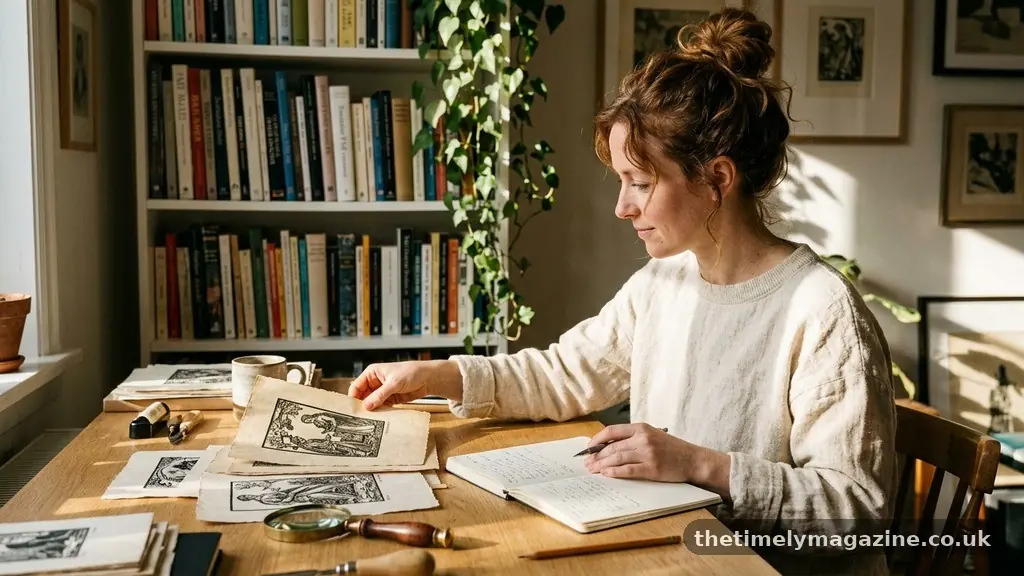
Good themes contain room for discovery. A reader might collect books translated from a particular language, editions with striking cover design, or works connected to a family member’s profession. An art collector could focus on one medium, such as woodcut prints, while using geography, subject, or date as a second filter.
Meaningful objects can follow a similar logic. Concert tickets, handwritten recipes, tools from a grandparent’s workshop, and souvenirs from significant journeys may seem unrelated until you identify the story connecting them. That story is often more important than market value.
Consider your available space and attention before committing to large or fragile items. A collection of framed paintings needs wall space, suitable lighting, and careful hanging, while rare books require stable storage and protection from damaging conditions.
Use a “why this belongs” test
Before buying or accepting an item, ask why it belongs in the collection rather than simply why you like it. The answer might involve the creator, date, technique, personal association, cultural context, or relationship to items already owned.
Keep a short note about each decision. Over time, those notes reveal patterns in your taste and make collection curation more intentional. They also help distinguish a meaningful addition from an impulse purchase that loses its appeal after a week.
Build a Realistic Acquisition Strategy
Once the purpose is clear, decide how objects will enter your collection. An acquisition strategy can include purchases from bookshops, galleries, estate sales, auctions, artists’ studios, antique dealers, family members, and gifts. Each source carries different advantages, risks, and expectations about price or documentation.
Set a yearly or monthly collecting budget, then divide it into categories. You might reserve most of the money for one important purchase, keep a smaller amount for inexpensive discoveries, and hold an emergency fund for framing, repairs, conservation, or shipping. The object’s price is only one part of its cost.
For example, an original artwork may require professional framing and insurance, while a box of letters could need acid-free folders and a flat archival container. A rare book might look affordable until you account for condition assessment, specialist advice, and secure storage.
| Collection type | Typical purchase questions | Additional costs to plan for | Useful first step |
|---|---|---|---|
| Books and manuscripts | Is the edition correct, and is the condition accurately described? | Shipping, protective enclosures, repairs, cataloging | Learn publisher, date, edition, and binding terms |
| Original artwork | Who made it, when was it made, and how is ownership documented? | Framing, transport, lighting, insurance | Buy directly from artists or established galleries when possible |
| Family or historical objects | What is the story, and can the story be supported? | Archival storage, digitization, conservation | Interview relatives and record names, dates, and places |
| Small souvenirs and ephemera | Does this item represent a meaningful event or place? | Boxes, sleeves, labels, display materials | Group items by person, journey, event, or theme |
Use a waiting period for expensive purchases. Waiting thirty days can reveal whether you still want the piece after the excitement of a shop visit, auction deadline, or online listing has passed. If the item sells, another opportunity may eventually appear; financial strain is harder to reverse.
Mix discovery with patience
Not every worthwhile addition needs to be rare. A signed paperback from a local author, a print purchased at a museum exhibition, or a family recipe written in an ordinary notebook may have more personal importance than a costly object with no connection to your life.
At the same time, patience matters for genuinely scarce material. Rare books and early editions may appear only occasionally, so learning the market before buying gives you a better chance of recognizing a fair opportunity. Keep a research list with titles, artists, editions, price ranges, and known dealers.
Gifts deserve the same thoughtful treatment as purchases. Explain your collecting focus to friends and relatives so they know what fits, and make it clear that a small, well-chosen item is preferable to a large object you cannot store or preserve.
Learn to Judge Quality, Condition, and Authenticity
Collection curation depends on judgment, and judgment improves with repeated observation. Before purchasing, compare similar objects in museum databases, reputable auction records, specialist catalogs, and established dealers’ descriptions. Look closely at materials, dimensions, signatures, publication details, repairs, and marks of age.
For books, check the title page, copyright page, edition statement, dust jacket, binding, pagination, and inscriptions. A first edition is not automatically desirable, and a later edition may be more useful or attractive if it has a better design or a personal connection.
For artwork, examine the surface, support, frame, signature, medium, and stated date. Ask whether the work has been exhibited, published, or included in an artist’s catalog. Those facts don’t guarantee value, but they provide context that helps you make a responsible decision.
Understand provenance
Provenance is the documented history of an object’s ownership. It may include a gallery invoice, exhibition record, family letter, publisher’s record, artist’s statement, estate inventory, or chain of sale. A complete history is not always available, especially for ordinary objects, but any reliable evidence should be retained.
Ask sellers direct questions and request written answers for significant purchases. If an auction listing says “attributed to” rather than “by,” that wording has a specific meaning: the creator is not being presented as fully confirmed. Read every qualifier rather than relying on a headline.
For inherited items, write down what relatives remember while the information is still available. Record who owned the object, where it was kept, when it was acquired, and any associated event. Oral history can be valuable even when no receipt survives.
Make authenticity verification proportionate
Authenticity verification should match the object’s price and risk. A low-cost paperback may need only basic edition research, while an expensive painting or signed manuscript may justify an independent specialist, laboratory testing, or review by an established authority.
Never let urgency replace evidence. Pressure to pay immediately, vague answers about ownership, suspiciously low prices, missing documentation, and refusal to allow inspection are reasons to pause. Walk away when the story cannot withstand ordinary questions.
A condition assessment is equally important. Tears, foxing, fading, water damage, restored pages, trimmed margins, overpainting, replaced parts, and unstable frames can affect both meaning and future care. Photograph flaws before buying and preserve the seller’s original description.
Create an Inventory That Tells the Story
A collection inventory turns scattered possessions into accountable records. Start with a spreadsheet or database containing an identification number, object title, creator, date, materials, dimensions, purchase or gift date, source, price, location, condition, provenance, and insurance value when relevant.
Use consistent labels. Instead of writing “old landscape painting,” record the artist if known, the title if supplied, the medium, the approximate date, and the place where it was acquired. If information is uncertain, mark it as “possibly,” “circa,” or “unconfirmed” rather than presenting a guess as fact.
Take several photographs of every important item. Include a full view, close-ups of signatures or inscriptions, damage, labels, edition numbers, and distinctive marks. Store copies in more than one place, such as a local drive and a secure cloud service, while keeping the original files at their highest practical quality.
Choose a cataloging system you will maintain
The best cataloging system is the one you will actually update. A spreadsheet works well for a small collection, while dedicated collection software may help with images, locations, loans, valuation records, and search functions as the group grows.
- Assign a unique identifier: Use a simple code such as BK-001, ART-002, or FAMILY-003.
- Record the object’s location: Note the room, shelf, drawer, frame, or storage box.
- Save supporting documents: Keep invoices, certificates, letters, appraisals, and correspondence with the record.
- Track changes: Add dates for conservation, loans, moves, sales, gifts, and condition updates.
- Back up regularly: A current inventory is most useful before a loss, move, insurance claim, or inheritance discussion.
Give each physical object a discreet, reversible identifier where appropriate. Do not place adhesive labels directly on fragile paper, unsealed ceramics, textiles, or painted surfaces without advice from a conservator.
Review the inventory once or twice a year. That review can uncover duplicate purchases, forgotten objects, inaccurate descriptions, or pieces that need different storage. It also gives you a natural moment to reconsider whether the collection still reflects your collecting goals.
Protect the Collection From Ordinary Damage
Most collections face more risk from sunlight, humidity, pests, careless handling, and unstable storage than from dramatic disasters. Books can suffer from dampness and mold, paper can become brittle under strong light, and artwork can warp when temperature and humidity change quickly.
Keep books upright when possible, supported by neighboring volumes of similar size. Oversized books often fare better flat, with no heavy objects placed on top. Avoid tight packing that makes removal difficult, because pulling a book by its spine can damage the binding.
Paper documents, photographs, and prints should be separated from acidic materials. Use archival folders, polyester sleeves suitable for the medium, and boxes designed for long-term storage. Remove ordinary rubber bands, plastic bags that trap moisture, newspaper wrapping, and pressure-sensitive tape.
Plan display and preservation together
Display is part of the pleasure of collecting, but every display decision affects preservation. Keep valuable works away from direct sunlight, radiators, fireplaces, damp bathrooms, and areas where condensation or food splashes are likely. UV-filtering glazing may reduce light exposure, but it cannot make an unsuitable location safe.
Rotate vulnerable pieces instead of leaving them permanently exposed. A collection can feel fresh when works move seasonally, and the rotation gives you an opportunity to inspect backs, frames, mounts, and surfaces for changes.
Handle objects with clean, dry hands and enough clear space to set them down safely. Cotton gloves are not automatically best for every object; they can reduce grip on smooth materials, so follow the handling practice appropriate to the item.
The Library of Congress advice on caring for collections offers practical information about books, paper, photographs, light, storage, and handling. For mold, structural damage, flaking paint, or valuable repairs, consult a qualified conservator rather than attempting an irreversible home treatment.
Think about insurance and emergencies
Collection insurance deserves attention once the financial or sentimental stakes become significant. A standard home policy may have limits, exclusions, or special requirements for art, rare books, jewelry, manuscripts, or objects used outside the home.
Ask an insurer how valuation, pairs and sets, accidental damage, transit, theft, and restoration are treated. Keep current photographs, receipts, appraisals, and your collection inventory in a location separate from the objects themselves.
Prepare a simple emergency plan. Know which items should be moved first during a leak, where archival boxes are stored, and who can access your records if you are unavailable.
Make the Collection Personal Without Making It Precious
A meaningful collection should remain connected to daily life. Read the books rather than treating every shelf as untouchable, invite someone to discuss a painting, or use a family bowl at a meal if its condition allows. Objects gain power through the memories and conversations they continue to generate.
Write short object labels for yourself and future family members. A note might explain that a small ceramic cup came from a first apartment, that a particular novel was found during a difficult year, or that a photograph shows a street before redevelopment. These details often disappear unless someone records them.
Consider making the collection accessible in selective ways. A private digital catalog can help relatives understand family history, while a small display at a community event, reading group, or local archive may connect your objects with people who share the same interest.
Let the collection change
Responsible collecting includes editing. You may outgrow a theme, discover that an object duplicates another, or realize that the cost of preservation exceeds its importance to you. Selling, donating, exchanging, or gifting an item is not a failure; it can give the object a better home and make room for a clearer collection.
Before removing something, update its record and consider the story attached to it. A sale may require documentation, a donation may need a condition note, and a family transfer should include the history you have gathered.
Revisit your collecting goals every few years. Changes in home, income, mobility, family responsibilities, or taste should influence your acquisition strategy. A smaller collection that you can understand, care for, and enjoy is often stronger than a larger one accumulated without direction.
Use Technology Without Losing the Human Story
Digital tools can make a personal collection easier to search, compare, and share. Scan bookplates, photograph maker’s marks, transcribe letters, and attach location data to images of travel souvenirs. Searchable notes are especially useful when several objects relate to the same person, place, or event.
Technology should support, not replace, physical judgment. A phone photograph cannot reveal every paper texture, pigment change, odor of mold, or structural weakness. Online images can help you research comparable objects, but they cannot substitute for inspecting a costly purchase in person or obtaining expert advice.
Use file names that remain understandable outside your preferred app. A name such as “ART-014_front_2026-03.jpg” is more useful than a camera-generated string, especially if the file must be transferred to another system years later.
Record the source of digital information as well as the information itself. If an artist’s date, family story, or edition detail came from a catalog, dealer, relative, or museum record, note that source and the date you consulted it.
Share knowledge responsibly
When you publish collection photographs online, avoid sharing sensitive details such as home addresses, security arrangements, or full insurance values. Consider whether high-resolution images could be copied or misused, particularly for signed documents, private letters, or culturally sensitive materials.
Ask permission before posting photographs of living artists’ work or identifiable family members. A private catalog can be detailed, while a public selection can focus on the story, craft, or history without revealing information that should remain private.
Digital records also make succession easier. A trusted person should be able to find the inventory, understand what matters, identify professional contacts, and know which objects require special care if the collection changes hands.
Frequently Asked Questions
How much money do I need to start a collection?
You can begin with whatever amount allows you to buy or preserve one meaningful item without creating financial pressure. Libraries, thrift shops, local artist markets, estate sales, and family archives can all provide worthy starting points, while your main investment may be time spent researching and recording each object.
Should I collect for investment or personal enjoyment?
Choose personal meaning as the foundation unless you have professional knowledge of the market. Prices can change, selling costs can be substantial, and authenticity or condition problems may be difficult for a beginner to detect, whereas an object connected to your interests retains value even if its resale price falls.
How do I know whether a rare book is worth buying?
Check the exact edition, condition, completeness, provenance, demand, and seller reputation. Compare the book with reliable catalog records and ask for photographs of defects, title pages, colophons, dust jackets, and inscriptions before paying a premium.
What should I do if I have no storage space?
Choose smaller objects, set a strict “one in, one out” rule, and prioritize items that can be safely displayed or stored in existing furniture. Avoid buying large pieces until you have a preservation plan, and consider digitizing documents or photographs while keeping only the originals with the strongest personal importance.
When should I hire a professional?
Seek specialist help for expensive artwork, uncertain authenticity, serious damage, mold, fragile manuscripts, complex insurance needs, or objects with possible legal or cultural restrictions. A qualified appraiser, conservator, archivist, or specialist dealer can prevent a costly mistake, but check their credentials and independence before relying on their opinion.
Let the Collection Grow With Your Life
Building a Personal Collection of Books, Art, or Meaningful Items works best as a patient practice: define what matters, buy with evidence, record each object, and protect it from ordinary harm. The result doesn’t need to be large or expensive; it needs to be coherent enough that you can explain why each piece belongs.
Start this month with one collecting sentence, one inventory record, and one carefully chosen addition or preservation task. As your collection changes, let its objects keep telling the honest story of your interests, relationships, and experiences.